Introduction
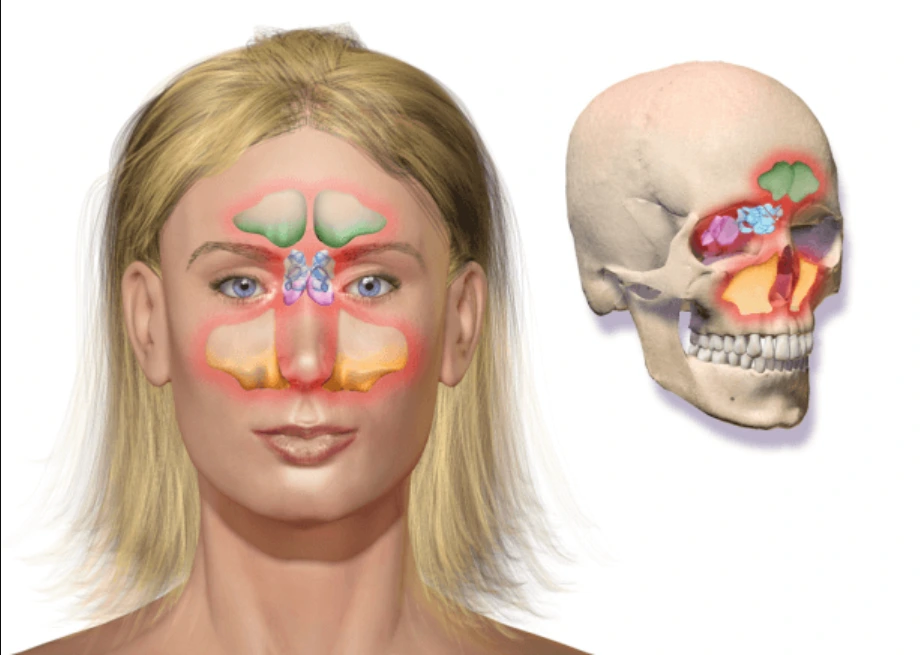
Sino-nasal skull base tumors are abnormal growths that arise from the nasal cavity, paranasal sinuses, or the base of the skull. These tumors occupy a complex anatomical region where the brain, cranial nerves, and major blood vessels converge, making their diagnosis and treatment challenging. Depending on their origin, sino-nasal tumors may be benign or malignant, and the involvement of the skull base complicates both their presentation and surgical management.
Types of Sino-Nasal Skull Base Tumors
- Benign Tumors
- Inverted Papillomas: A locally aggressive tumor that can recur if not fully removed.
- Osteomas: Bony tumors that usually arise from the frontal or ethmoid sinuses and may block the sinuses.
- Fibrous Dysplasia: A condition where bone tissue is replaced with fibrous tissue, leading to deformity.
- Malignant Tumors
- Squamous Cell Carcinomas (SCC): The most common malignant sino-nasal tumor.
- Adenocarcinomas: Arise from glandular cells and are often linked to occupational exposures.
- Esthesioneuroblastomas: Also known as olfactory neuroblastomas, these arise from the olfactory epithelium and affect smell.
- Sinonasal Undifferentiated Carcinomas (SNUC): Highly aggressive tumors with a poor prognosis.
- Melanomas: Can develop in the nasal cavity or paranasal sinuses and are often aggressive.
These tumors are rare, with malignant tumors comprising less than 1% of all malignancies and primarily affecting middle-aged adults【11】【12】.
Symptoms
The clinical presentation of sino-nasal skull base tumors depends on the location and extent of the tumor. Common symptoms include:
- Nasal obstruction and congestion.
- Epistaxis (nosebleeds).
- Facial pain or swelling.
- Proptosis (bulging of the eye) or double vision (diplopia).
- Loss of sense of smell (anosmia).
- Neurological symptoms, such as headaches or cranial nerve dysfunction, if the tumor involves the brain or cranial nerves.
Due to the nonspecific nature of these symptoms, sino-nasal tumors are often diagnosed late when they have already spread to surrounding structures.
Diagnostic Techniques
- Imaging Studies:
- CT scans help visualize bone involvement and sinus obstruction.
- MRI provides better detail on soft tissue extension into the orbit or brain.
- PET-CT may be used to assess metastatic spread.
- Endoscopic Nasal Examination:
- Direct visualization using a nasal endoscope can help detect masses or polyps.
- Biopsy:
- A biopsy is required to confirm the diagnosis and determine the type of tumor. This can be performed via endoscopy or during surgery.
Management
1. Surgery
- Endoscopic Skull Base Surgery:
Advances in technology now allow for minimally invasive approaches using endoscopes through the nostrils. This technique minimizes the need for large external incisions, reduces recovery time, and preserves critical functions. - Open Surgery:
In cases where the tumor is extensive or involves the brain or eye, open surgical approaches such as the craniofacial resection may be required. These procedures involve a multidisciplinary team, including neurosurgeons and ENT surgeons.
2. Radiotherapy
- Postoperative Radiotherapy:
Radiation therapy is often recommended after surgery to reduce the risk of recurrence, particularly for malignant tumors such as SCC or esthesioneuroblastomas. - Stereotactic Radiotherapy:
For certain tumors, stereotactic radiation can be used to deliver high doses of radiation with precision to avoid damaging nearby healthy tissue.
3. Chemotherapy
- Chemotherapy may be used for tumors with a high risk of metastasis or those that are not fully resectable. It is often combined with radiotherapy (chemoradiation) for aggressive malignancies such as SNUC.
4. Immunotherapy and Targeted Therapy
- For some tumors, targeted therapies or immunotherapy agents may provide additional treatment options. These treatments are still under investigation but have shown promise in clinical trials for specific tumor types like melanoma.
Complications and Follow-up
- Recurrence: Even after surgery, some tumors (especially inverted papillomas and malignant tumors) have a high chance of recurrence, necessitating close monitoring.
- Neurological Deficits: Damage to cranial nerves or brain structures during surgery can lead to neurological complications.
Follow-up Imaging: Regular imaging studies (MRI or CT scans) are required to monitor for recurrence or complications.
Conclusion
Sino-nasal skull base tumors represent a diverse group of tumors that pose significant diagnostic and treatment challenges due to their location and potential to involve critical anatomical structures. Advances in endoscopic surgery, combined with radiotherapy and emerging therapies, have improved outcomes for many patients. However, early diagnosis and a multidisciplinary approach remain crucial for effective management and better quality of life